Fiber Optic vs Copper Core USB4 Full-Feature Cables Compared: The 0.8m vs 30m Distance Boundary, PD Grading and Selection Logic
2026-09-15
Introduction | Two cables both labeled "USB4 full-feature" can differ radically: one reaches 0.8 meters, the other 30; one delivers full 240W power, the other carries data only over long runs. Copper and fiber are not substitutes but complementary tiers divided by distance, power and environment. This article breaks down transmission principles, core parameters, PD grading and scenario matching, and maps them to the KING KABLE copper C800 and fiber G400/G800 series for an actionable selection logic.
1. What Makes a USB4 Cable "Full-Feature": Data, Video and Power in One
"Full-Featured" means a single USB-C cable carries three capabilities at once: on data, USB4 Gen3x2 reaches 40Gbps and USB4 2.0 (Gen4) reaches 80Gbps symmetric or up to 120Gbps asymmetric; on video, DisplayPort Alt Mode tunneling supports 4K@120Hz and 8K@60Hz; on power, USB PD 3.1 supports up to 240W (48V/5A with a 5A e-marker).
With USB4, high-speed differential signals approach the 20GHz range and copper attenuation plus crosstalk become the physical bottleneck. That is precisely why fiber entered the USB-C ecosystem: once distance exceeds copper's full-speed limit, optical conversion becomes the viable path to preserve bandwidth.
2. Transmission Principles: Electrical Signaling vs Optical Conversion
Copper cables carry electrical signals: high-speed differential pairs run over copper conductors, passive cables use no chips while active copper cables (ACC) embed Retimer chips at both ends to reshape and amplify attenuated signals. Fiber cables are active optical cables (AOC): the transmit-side optical engine modulates electrical signals into light, the fiber carries them, and the receive-side detector converts them back; high-speed lanes run entirely over fiber while power and low-speed signals run over built-in copper wires, forming a fiber-for-data, copper-for-power hybrid architecture.
The two fight loss in opposite ways: copper relies on shielding, twisting and Retimers; fiber sidesteps distance attenuation altogether through optical conversion. The price is that fiber cables must integrate optical engines at both ends, raising cost and power draw, and PD capability is limited by the cross-section of the internal copper conductors.
3. Core Parameters: Distance, Power and Immunity Decide the Winner
40Gbps full-speed reach: passive copper holds about 0.8m, active copper about 2m; fiber covers 2-15m in production and up to 30m custom. In the 80Gbps (USB4 2.0) era passive copper compresses to roughly 0.5m, while fiber still runs full speed beyond 10m.
Power delivery: copper supports PD 3.1 end to end at up to 240W; fiber is length-graded — full power within 3m, about 100-120W from 3-5m, 60W or only 5V/1A beyond 5m, and ultra-long runs above 8m usually drop PD entirely, requiring local power nearby.
Immunity and diameter: copper suffers EMI/RFI and depends on shielding and twisting; fiber is inherently immune with zero EMI/RFI. Fiber jackets can be as slim as about 4.7mm and weigh roughly 80 percent less than equivalent copper, with drag-chain grades validated for tens of millions of bend cycles.
4. PD Grading: The Fiber Cable's Biggest Compromise
Fiber does not conduct electricity, so power must travel through built-in copper wires whose cross-section, voltage drop and length directly conflict; PD capability is therefore graded by length: full charging for high-power laptops and workstations within 3m; mainstream laptops from 3-5m; peripherals only beyond 5m; and ultra-long runs above 8m focus on lossless high-speed data plus 8K video.
The standard practice for long-reach fiber is therefore: the data cable does data only, power comes from a local supply nearby — the common approach in conference rooms, exhibitions and DIT stations.
5. Mapping to Products: C800 for the Desk, G400/G800 for Distance
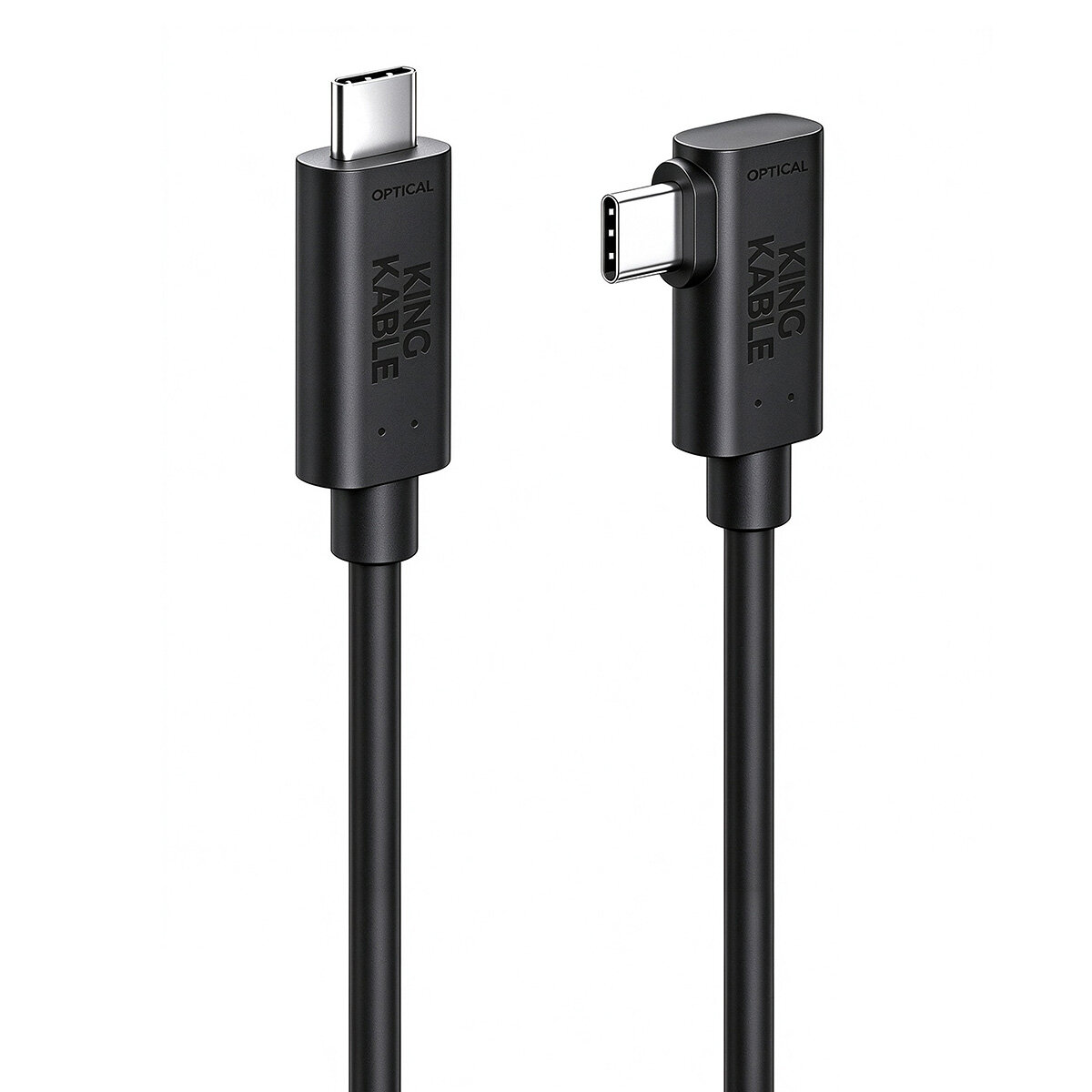
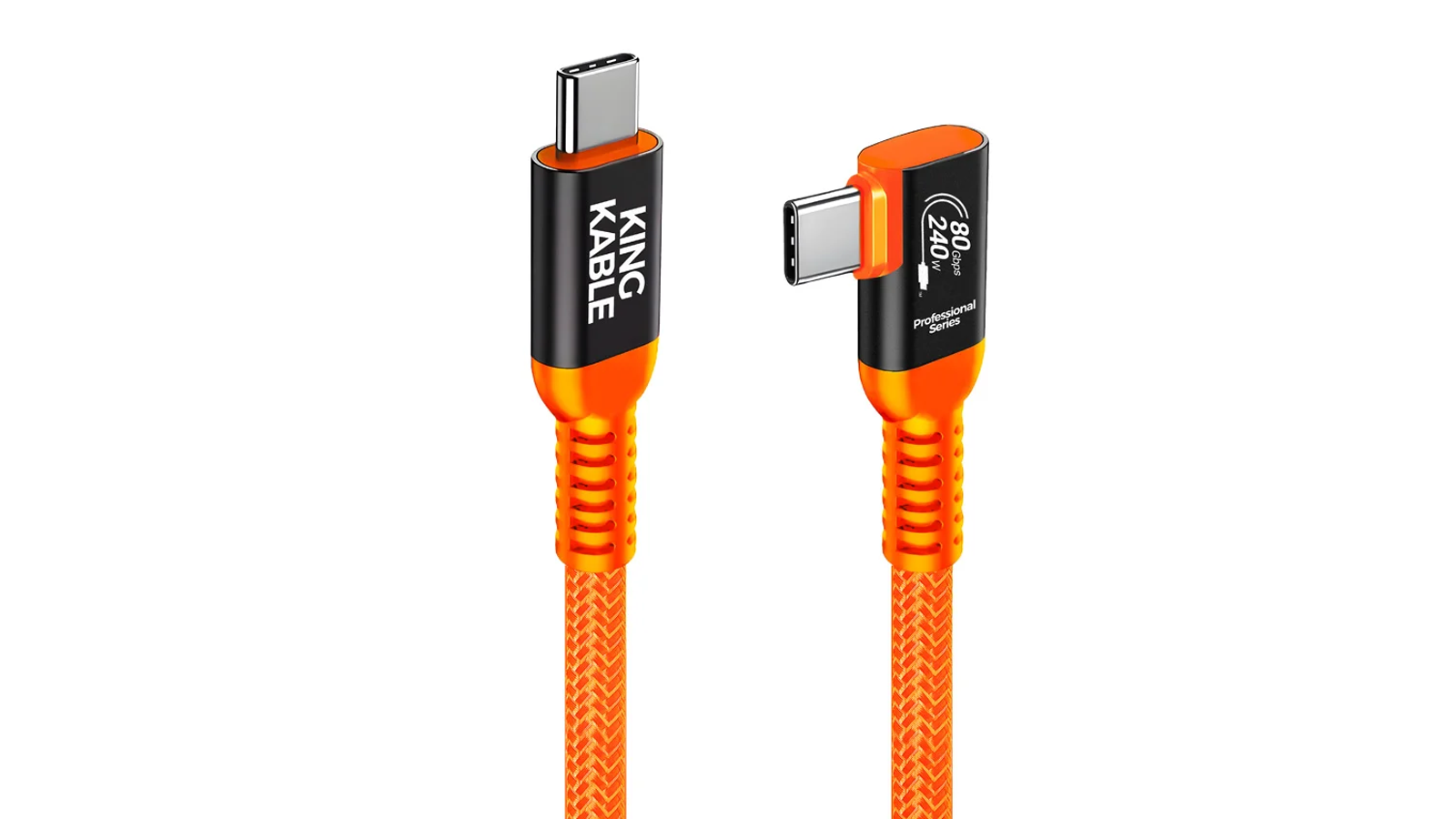
Copper for short desk runs: the KING KABLE Copper Core USB4 Gen4 Straight/Angled Full-Feature Cable C800 supports USB4 Gen4 80Gbps with Thunderbolt 5/4/3 compatibility, 8K@60 or 4K@144 video output and full 240W PD fast charging, in straight and angled versions — the default choice for sub-1-meter laptop docking and desk links.
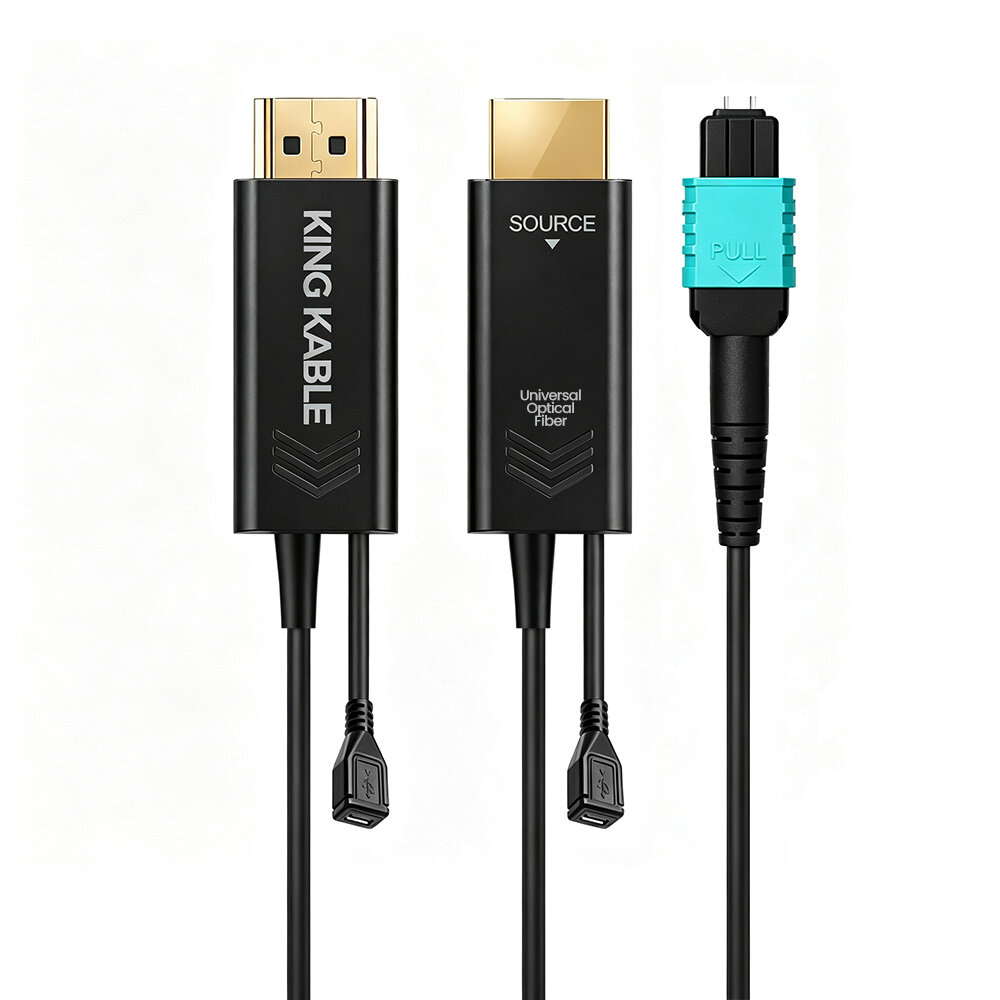
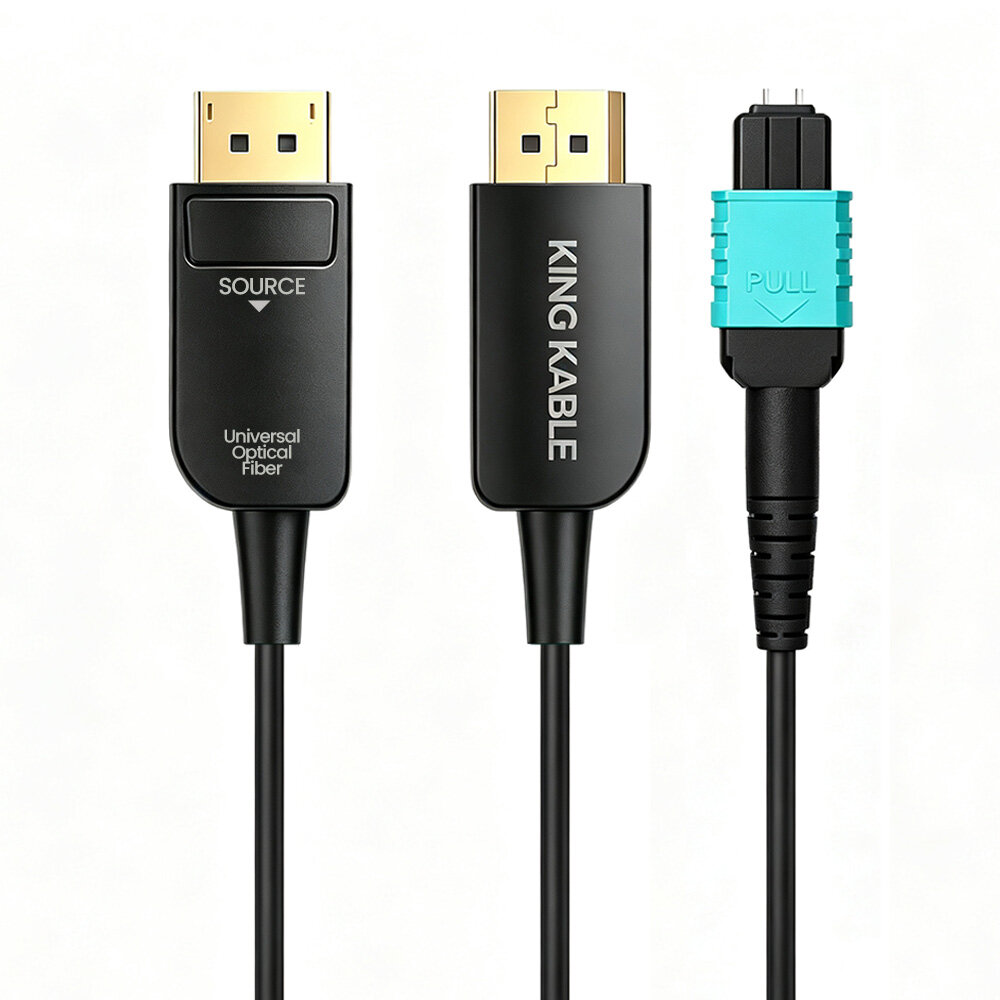
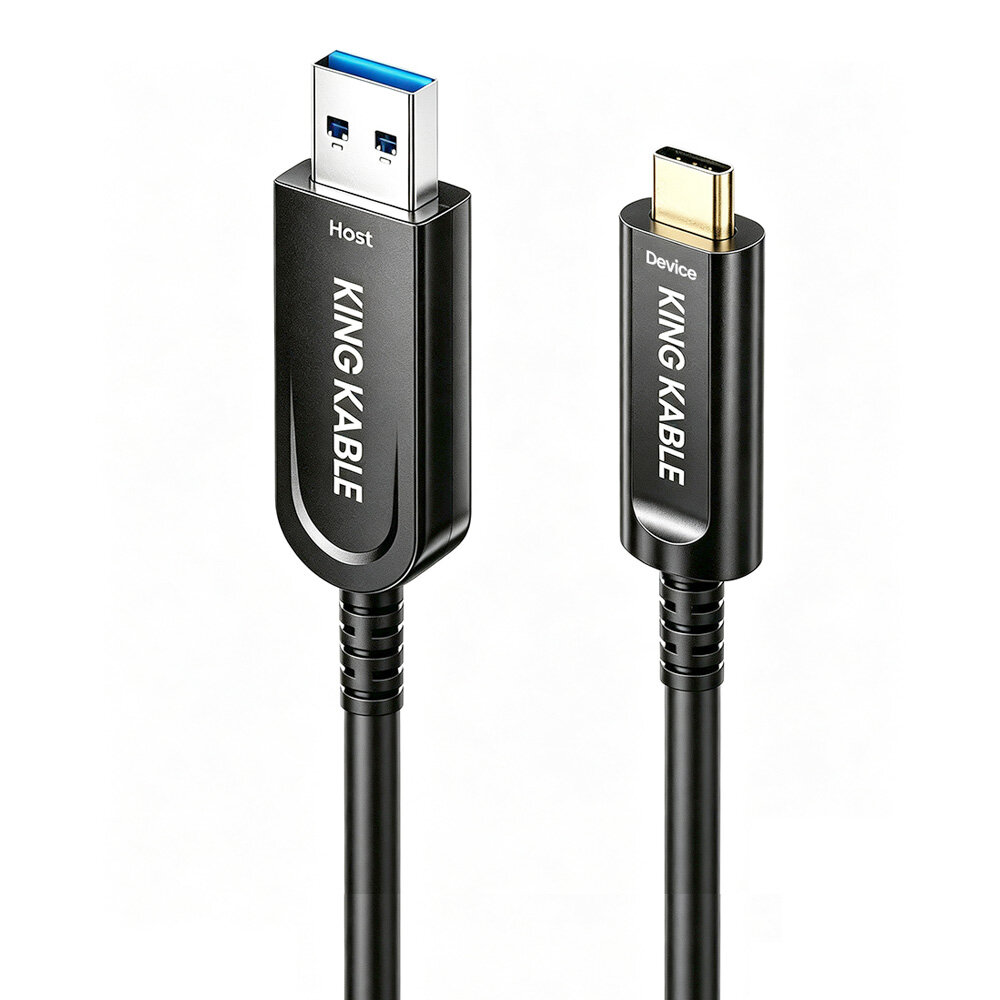
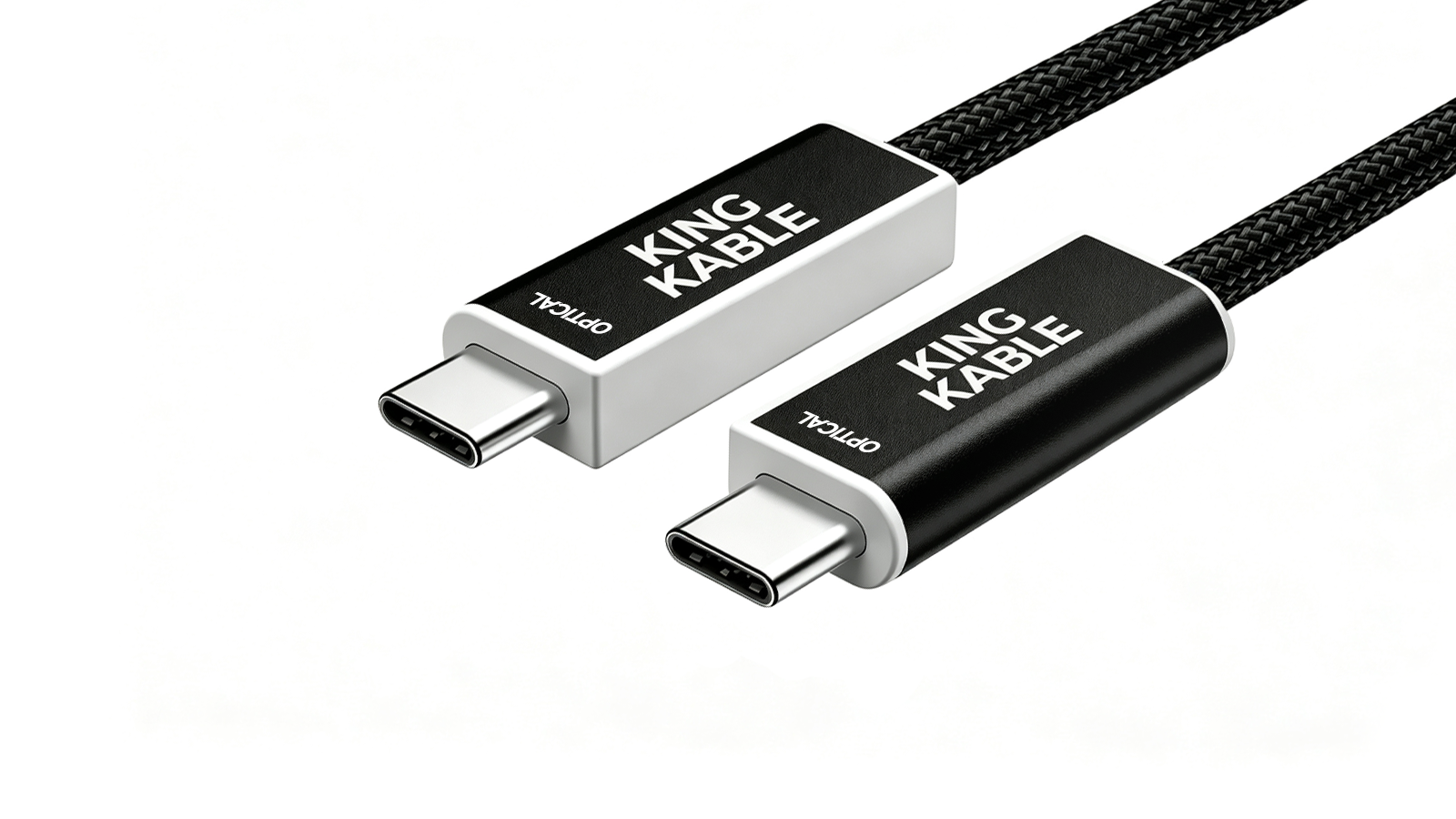
Fiber for medium and long runs: the Fiber Optic USB4 Full-Feature Type-C Data Cable G400 uses an OM3 10G fiber plus high-purity copper hybrid structure with 40Gbps bandwidth, 8K@60Hz video, a 4.7mm slim jacket and up to 30m lossless reach; the Fiber Optic USB4 Gen2 Full-Feature Data Cable G800 is the second-generation 8-lane full-feature design, compatible with Thunderbolt 5/4/3 and DP2.1, supporting 8K60 video and PD fast charging for AR/VR headsets and next-generation devices.
6. Scenario Matching and Selection Decisions
Choose copper for sub-1-meter desk runs, full 240W power needs and cost-sensitive deployments; under 80Gbps requirements passive copper tightens to about 0.5m and active copper should be evaluated.
Choose fiber beyond 1.5m or in high-EMI environments (near motors, RF gear or medical devices); for 2-15m concealed routing in conference rooms, showrooms and studios; for film DIT and 8K monitoring; for operating rooms and medical imaging; for data-center long jumpers; and for drag-chain or robot-arm motion duty choose high-flex grades.
A three-step selection method: ask distance first, power second, environment third. When long reach must combine with full power, pair the fiber cable with external local power and confirm the PD rating of the chosen length; at procurement verify directionality (bidirectional preferred), e-marker and PD certification, and request the full specification sheet.
7. Conclusion
Copper and fiber USB4 full-feature cables represent a trade-off between electrical and optical domains: copper fights loss with shielding and Retimers, fiber bypasses loss with optical conversion. In the 40Gbps era copper holds the sub-0.8m desk home turf; entering the 80Gbps and Thunderbolt 5 era copper's full-speed reach compresses to the 0.5m class while fiber still runs full speed beyond 10m, and the fiber-advances-copper-retreats boundary keeps moving outward along the distance axis. Copper is the default, fiber is the specialty, and together they form the complete USB4 full-feature connection solution. To match a model to your distance and power tier, browse the Fiber Optic USB Cable Series, the Gold/Silver/Copper Cable Series or contact us for selection advice.