Detachable Fiber Optic HDMI2.1 2.2 Cables Explained: MPO Detachable vs A-to-D Split-Head Designs, Compared and Selected
2026-09-16
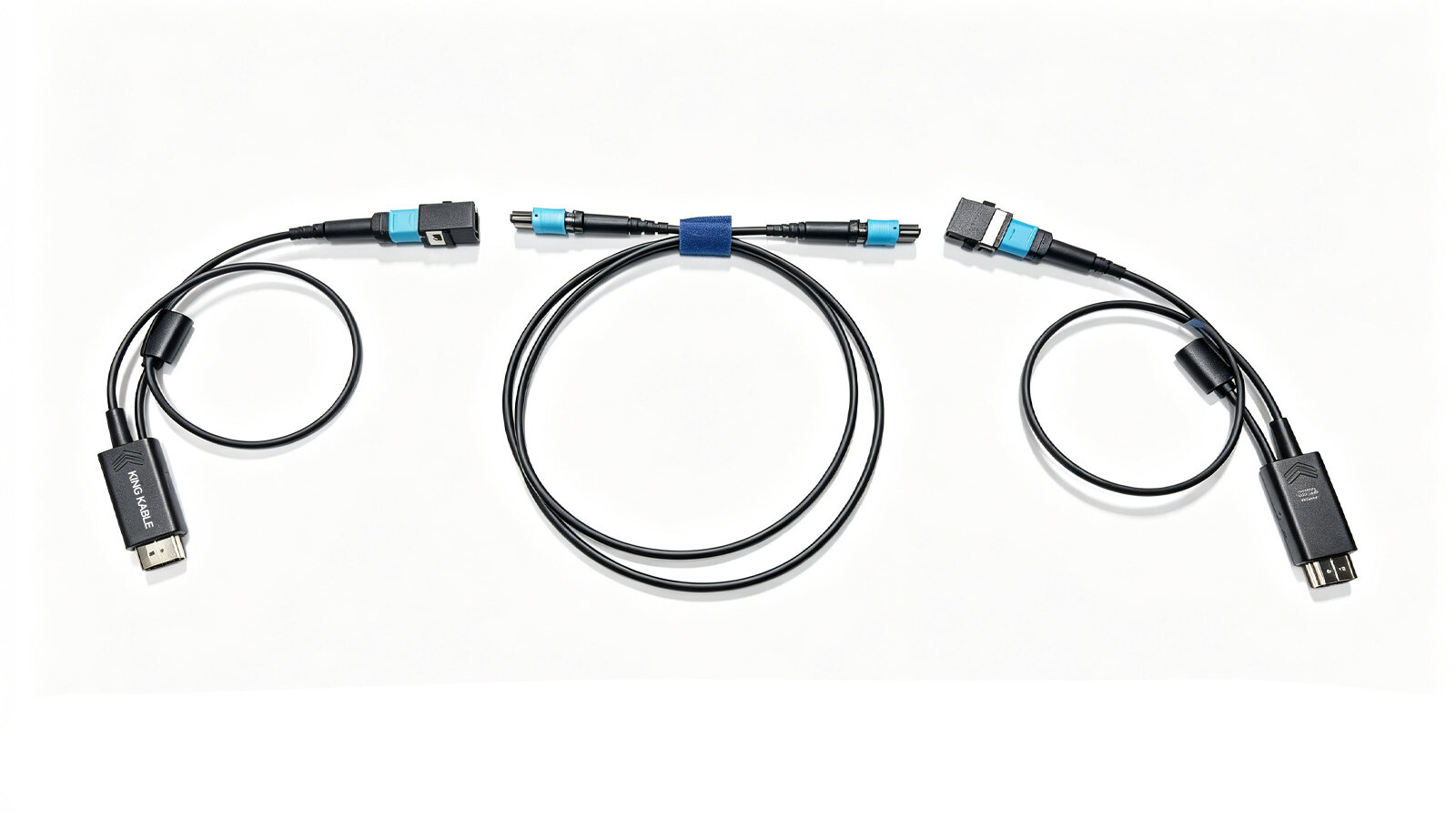
Introduction | When pre-installing conduits during renovation, the opto-electronic terminals at both ends of an integrated fiber optic HDMI cable are often fatter than the pipe itself: 16mm, 20mm and 25mm conduits simply will not pass. Detachable fiber optic HDMI cables split the optical modules from the fiber trunk: pull the slim trunk first, then attach the modules, so the conduit only needs to accommodate a 3-5mm fiber core. Based on the KING KABLE HD011, HD012 and A214, this article explains the structures, specifications and scenario selection of the two mainstream detachable routes: MPO detachable and A-to-D split-head.
1. Why Detachable Fiber Optic HDMI Cables Are Needed
Integrated fiber HDMI cables solved long-reach transmission, but their opto-electronic modules are far bulkier than the cable body and cannot pass right-angle bends, multi-segment conduits or narrow access openings. The detachable approach decouples modules from the trunk: installers pull the slim fiber trunk through the conduit first and attach conversion modules at both ends afterwards, so the pulling diameter only needs to fit the trunk itself (typically 3-5mm), dramatically easing engineering installation.
Four core values: easy conduit pulling, a 3-5mm trunk passes 16mm-plus conduits with bends and multi-segment runs; replaceable upgradeable modules, once the trunk is buried the modules can be swapped individually when HDMI versions or connector types change, with no re-wiring; multi-protocol reuse, the same fiber trunk can become HDMI, DP or DVI by changing modules; lower installation risk, precision optical chips and connectors bear no pulling force, and a damaged module is replaced alone at low cost.
2. The Two Mainstream Detachable Routes
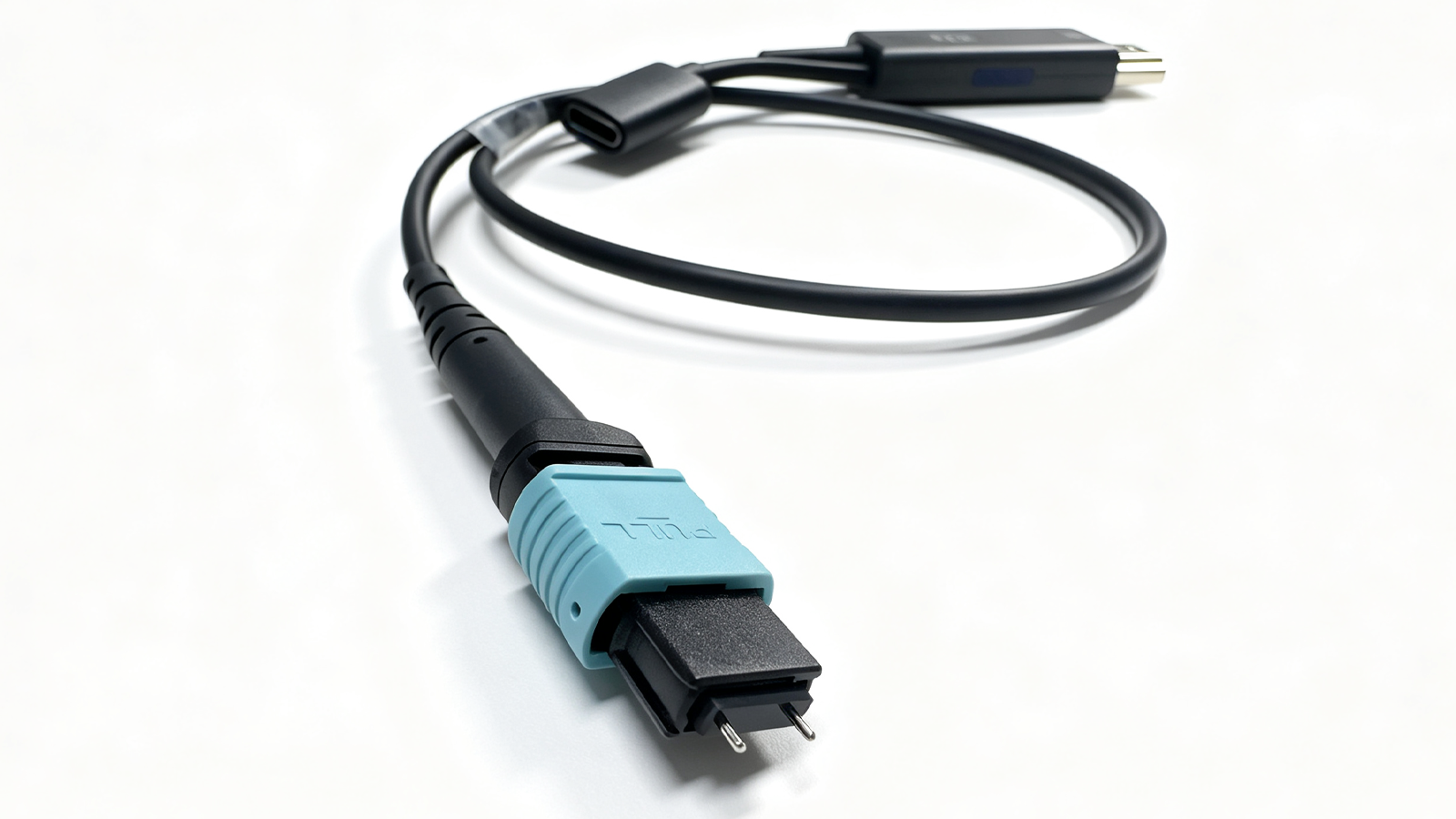
MPO detachable: full-spec pure fiber architecture. MPO (Multi-fiber Push On) is a multi-fiber connector standard born in data-center optics. The trunk ends in MPO connectors while each HDMI module integrates the optical engine and an MPO port, allowing fast plug-and-play between trunk and modules. Its core advantage is pure optical transmission with no copper: the signal travels as light end to end, emitting no EMI and immune to external interference, which matters in medical, security, marine and industrial environments. Structure: HDMI A module, MPO connector, 6-fiber OM3 trunk, MPO connector, HDMI A module; both ends detachable with generous trunk bandwidth headroom for module upgrades.
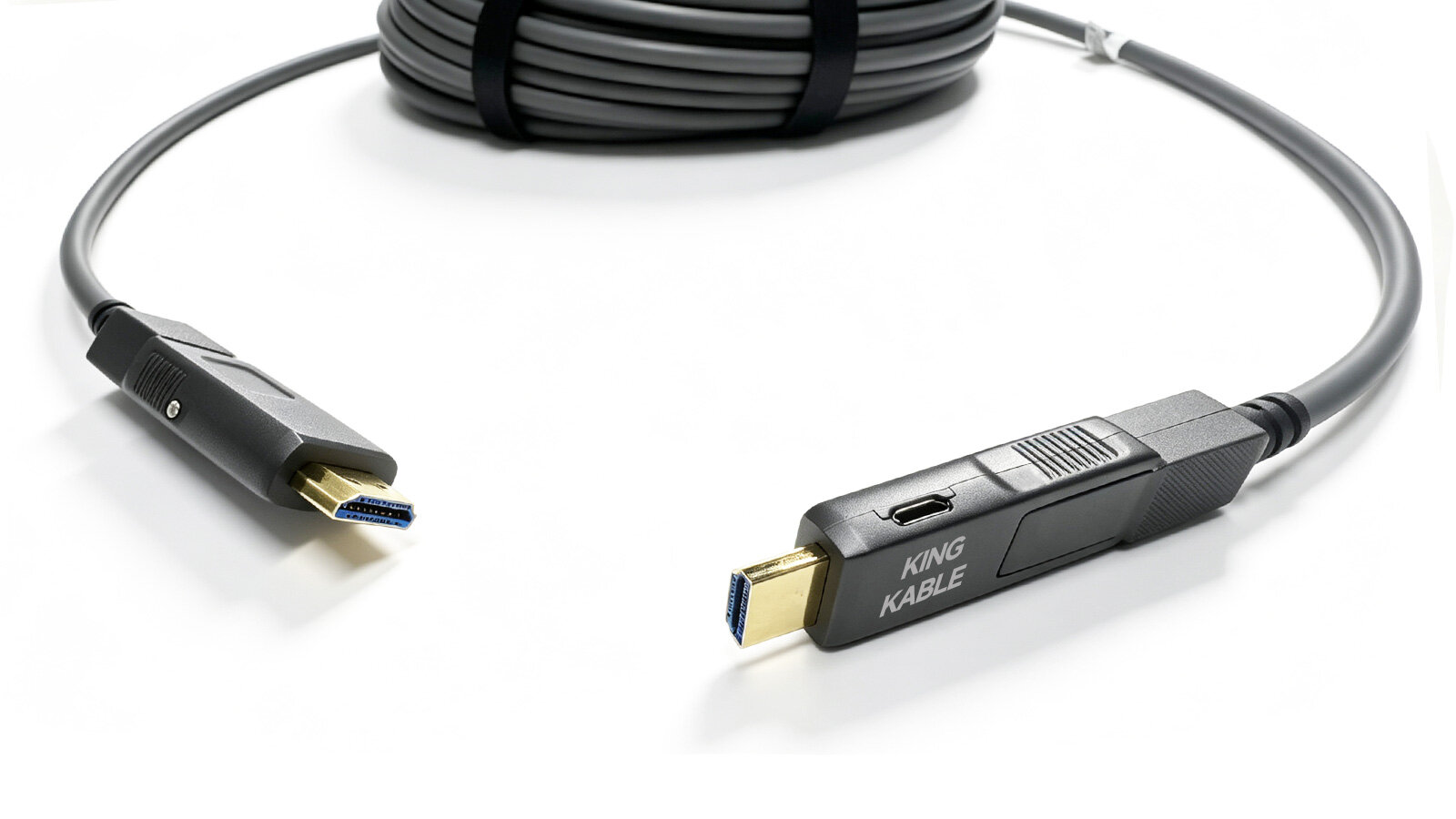
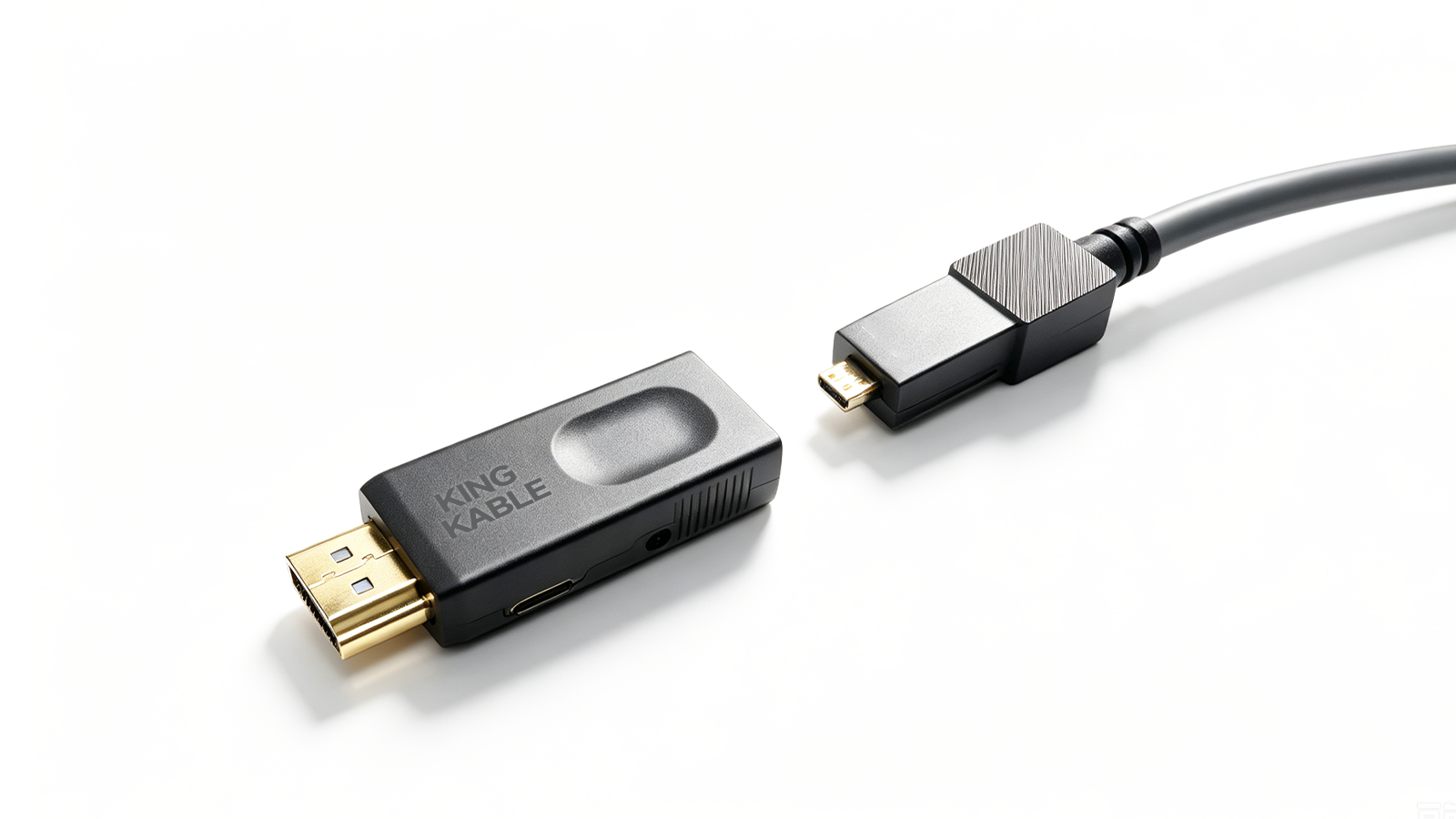
A-to-D split-head: micro-connector conduit pulling. This route exploits the tiny Micro HDMI (Type D) connector: one trunk end carries a standard HDMI A plug, the other a Micro HDMI D plug of only about 6.4 x 2.8mm versus 13.9 x 4.45mm for HDMI A, small enough to pull through narrow conduits; after pulling, a D-to-A adapter restores a full HDMI A-to-A link. Structure: HDMI A plug, fiber trunk, Micro HDMI D plug, D-to-A adapter; single-end detachable, simple, hybrid fiber-copper and cost-effective.
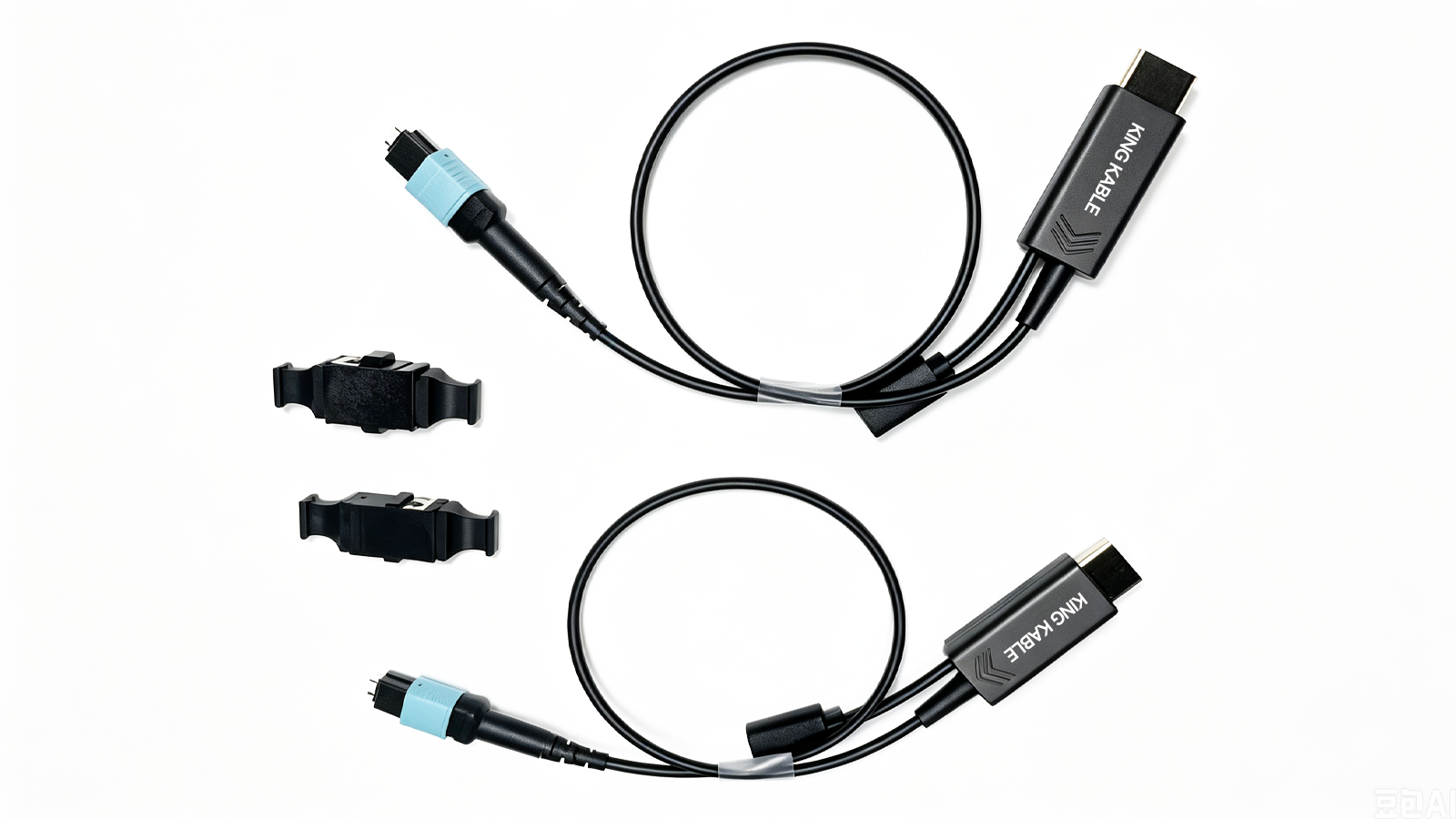
Key difference: the MPO route detaches both ends and the trunk is fiber only, a pure optical link; the A-to-D route detaches only the small end, and pulling happens from that side. The two differ clearly in complexity, cost and target scenarios.
3. KING KABLE Detachable Product Lineup
HD011: Pure Fiber HDMI 2.1 Cable, MPO Detachable (Standard). Built on mature laser and driver chipsets with a six-fiber 10G core and zero copper conductors. Key specs: HDMI 2.1, 48Gbps (12Gbps x 4 channels), trunk bandwidth up to 100Gbps, 8K@60Hz / 4K@120Hz / 10K, 6-fiber OM3 pure fiber, 3.0mm jacket, MPO heads with detachable modules, 500m standard length with custom options, HDCP 2.2/2.3 with EDID auto-detection, Kevlar reinforcement. Ideal for medical, security, broadcast and marine projects with strict EMC requirements.
HD012: Armored Pure Fiber HDMI 2.1 Cable, MPO Detachable (Reinforced). Keeps every HD011 core trait and adds a stainless-steel armor layer with Kevlar filling to survive stepping, pulling and crushing, the first choice for stage rental, industrial sites, vessels and mines; it also supports swapping HDMI/DP/DVI modules.
A214: Fiber Optic HDMI 2.1 Cable with A-to-D Split Head. Delivers full HDMI 2.1 performance while the Micro HDMI small end enables conduit pre-installation: 48Gbps, 8K@60Hz / 4K@120Hz, hybrid architecture (fiber for high-speed signals, copper for power and eARC), typical lengths 1-100m, HDR/VRR/ALLM/QMS/eARC/HDCP 2.3 support; after pulling, the D-to-A adapter restores plug-and-play, making it the cost-effective pick for home theater pre-wiring and mid-size projects.
4. Specification Comparison of the Three Designs
Detachment: HD011 and HD012 use MPO connectors with both ends removable; A214 pulls through by its single Micro HDMI D end. Architecture: HD011/HD012 are pure fiber with no copper; A214 is hybrid fiber-copper. Bandwidth headroom: HD011/HD012 trunks reach 100Gbps for future upgrades; A214 offers 48Gbps without redundancy. Maximum length: about 500m for HD011/HD012 with custom options; typically 10-50m for A214. Conduit requirements: the 3mm HD011 trunk pulls easiest; armored HD012 needs a larger pipe; the A214 D-end requires conduits of 10mm or more. Module swapping: HD011/HD012 accept HDMI/DP/DVI module changes; A214 only swaps the D-to-A adapter. EMI immunity: complete for the pure-optical HD011/HD012; good for the hybrid A214. Mechanical protection: Kevlar for HD011, stainless armor for HD012, standard fiber protection for A214. eARC: better supported on A214 via its copper return channel; pure-optical designs depend on implementation. Price tier: HD011 mid-high, HD012 high, A214 mid.
5. Scenario Selection Guide
Home theater pre-wiring: A214 or HD011. The needs are conduit pulling, 8K HDR quality, moderate price and simple installation; the A-to-D route wins on value, while budget-rich projects expecting future upgrades may choose the MPO-based HD011. Medical imaging and surgical systems: HD011. MRI/CT rooms with strong magnetic fields demand zero metal conductors and operating rooms require strict electrical isolation, which the pure-fiber copper-free design satisfies. Stage rental and outdoor shows: HD012. Cables are coiled, stepped on and dragged daily; stainless armor survives tour-grade abuse and a failed module is swapped instead of scrapping the cable. Industrial automation and marine: HD012. Pure optical transmission is immune to motor and inverter EMI, the armor resists salt spray and vibration, and 300m-plus reach covers cross-facility runs. Broadcast centers and video conferencing: HD011. Lossless pure-fiber transport keeps 8K intact over distance, and the 100Gbps trunk means future upgrades only need new modules, not new wiring. Security and video walls: HD011 or A214. Long multi-run links favor MPO; under 50m with tight budgets the A-to-D route is economical.
6. Purchasing Notes and Pitfalls to Avoid
Measure conduits before choosing: pipes of 20mm or more with few bends may accept integrated cables; pipes of 16mm or less, or runs with multiple right angles, require detachable designs. Confirm eARC needs: pure-fiber eARC support depends on the design, so verify before buying for TV-to-amplifier audio return; hybrid A-to-D cables keep copper and support eARC better. Keep MPO connectors clean: cap dust covers when idle, clean end-faces with lint-free swabs, never touch the fiber ends, and keep MPO cleaning kits on site. Know pure fiber versus hybrid: strict electromagnetic isolation (medical, confidential, high-EMI sites) demands pure fiber; home theaters can save with hybrid. Reserve upgrade headroom: buried cabling is a one-time job, so prefer MPO trunks with bandwidth headroom; future HDMI 2.2-class upgrades may need only module swaps. Test module compatibility first: before pulling, connect the modules to the actual source and display and verify resolution, refresh rate, HDR and HDCP all work.
7. Conclusion
Detachable fiber optic HDMI cables decouple opto-electronic modules from the fiber trunk to solve the oversized-terminal conduit problem. The pure-fiber MPO route (HD011/HD012) offers the deepest engineering: pure optical transmission, both ends detachable and generous trunk headroom for medical, industrial and broadcast projects, with HD011 as the standard grade and armored HD012 for abusive environments. The A-to-D route (A214) is simpler and cheaper, the value pick for home theater pre-wiring. Decide by three factors: how narrow the conduit is, how harsh the environment is, and how much budget exists. In one line: home renovation picks A-to-D, professional projects pick MPO standard, and abusive sites pick MPO armored. To match a model to your scenario, browse the Fiber Optic HDMI Cable series or contact us for selection advice.
Previous:
No more articlesRelated Products
TS004
Optical Fiber USB TypeC to HDMI2.1 Video Cable
View Details
USB030
Optical Fiber USB3.1 Gen1 TypeA to Micro B 90° Right Angle Cable
View Details
USB032
Optical Fiber USB3.1 Gen1 TypeA to Micro B T-Shape Down Angle Cable
View Details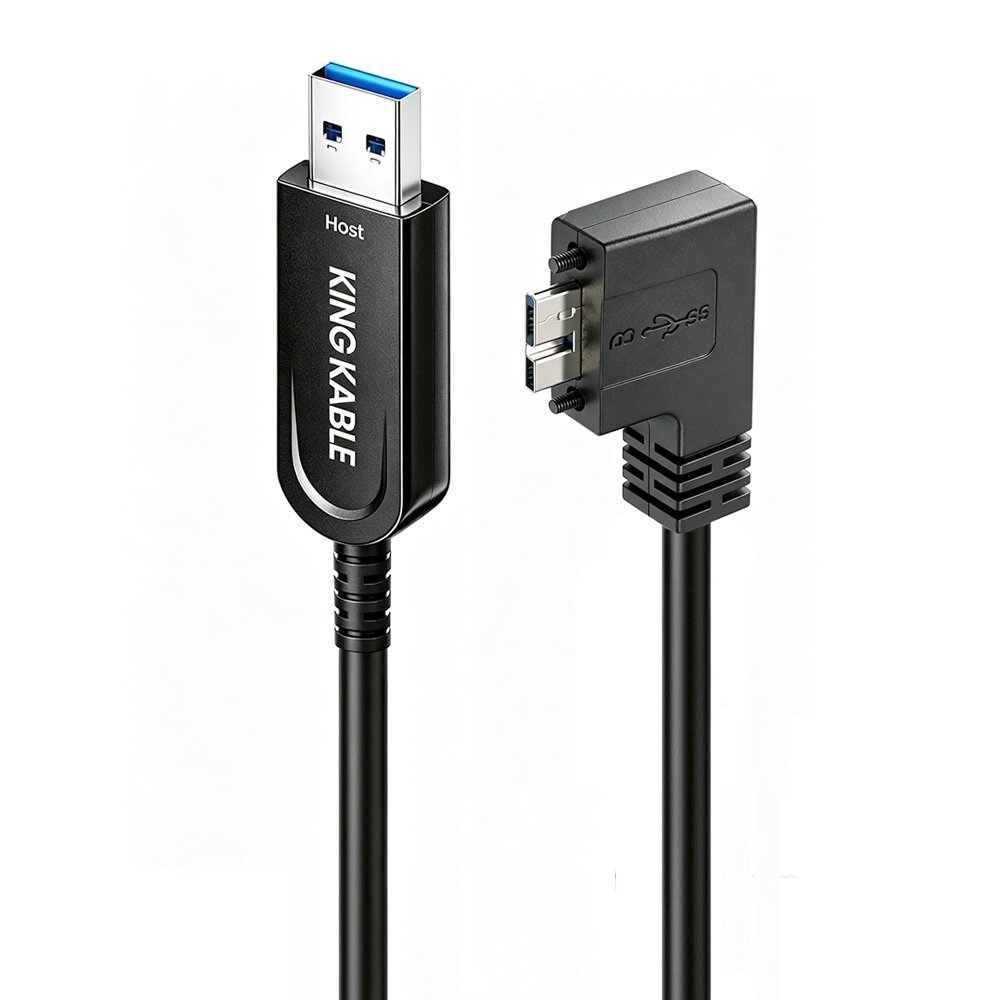
USB029